How to Eat Fruits and Vegetables Every Day
A Simple Guide for Better Health
Most Americans know that fruits and vegetables are good for their health, yet many struggle to eat enough of them every day. Busy schedules, convenience foods, and lack of meal planning often make it difficult to meet recommended daily servings.
Learning how to eat fruits and vegetables consistently doesn’t require a complete lifestyle overhaul. Small changes to your daily routine can significantly increase your intake of essential vitamins, minerals, fibre, and antioxidants.
This guide will show you practical and realistic ways to add more fruits and vegetables to your diet while enjoying delicious meals and snacks.
Why Fruits and Vegetables Are Important
Fruits and vegetables are among the most nutrient-dense foods available. They provide essential nutrients that support nearly every function in the body.
Some of the key benefits include:
- Improved heart health
- Better digestion
- Stronger immune system
- Healthy weight management
- Reduced risk of chronic diseases
- Increased energy levels
- Healthier skin and hair
According to dietary recommendations, adults should aim for approximately 1.5 to 2 cups of fruit and 2 to 3 cups of vegetables each day. However, many people fall short of these targets.
Start Your Day with Fruits
Breakfast is one of the easiest opportunities to increase fruit consumption.
1. Add Fruit to Your Cereal
Top whole-grain cereal or oatmeal with:
- Bananas
- Blueberries
- Strawberries
- Apples
- Peaches
This simple addition provides fiber, vitamins, and natural sweetness without added sugar.
2. Blend a Smoothie
Smoothies are a convenient way to consume multiple servings of fruits and vegetables in one meal.
Popular ingredients include:
- Spinach
- Kale
- Bananas
- Mixed berries
- Mango
- Pineapple
For added protein, include Greek yogurt or protein powder.
3. Enjoy Fruit with Yogurt
Plain Greek yogurt paired with fresh fruit creates a balanced breakfast rich in protein and nutrients.
Make Vegetables Part of Every Meal
One of the best strategies for eating more vegetables is making them a regular component of lunch and dinner.
1. Fill Half Your Plate with Vegetables
Nutrition experts often recommend filling half your plate with vegetables at meals.
Examples include:
- Broccoli
- Green beans
- Carrots
- Brussels sprouts
- Cauliflower
- Bell peppers
This method naturally increases nutrient intake while helping control portion sizes of higher-calorie foods.
2. Add Vegetables to Eggs
Vegetables pair perfectly with breakfast dishes.
Try adding:
- Spinach
- Mushrooms
- Tomatoes
- Onions
- Peppers
to omelettes, scrambled eggs, or breakfast burritos.
3. Include a Side Salad
A fresh salad can quickly add an extra serving or two of vegetables to your day.
Mix:
- Lettuce
- Cucumbers
- Tomatoes
- Carrots
- Avocado
With a light dressing for a nutritious side dish.
Choose Fruits and Vegetables as Snacks
Snacking often contributes a large portion of daily calories. Replacing processed snacks with produce can improve overall diet quality.
1. Easy Fruit Snacks
Keep ready-to-eat fruits available:
- Apples
- Oranges
- Grapes
- Pears
- Bananas
- Clementines
These portable options are ideal for work, school, or travel.
2. Vegetable Snack Ideas
Try:
- Baby carrots
- Celery sticks
- Bell pepper slices
- Cucumber rounds
- Cherry tomatoes
Pair them with healthy dips such as hummus or Greek yogurt-based dressings.
3. Prepare Snacks in Advance
Wash, cut, and portion fruits and vegetables at the beginning of the week. When healthy options are convenient, you’re more likely to choose them.
Add Vegetables to Foods You Already Enjoy
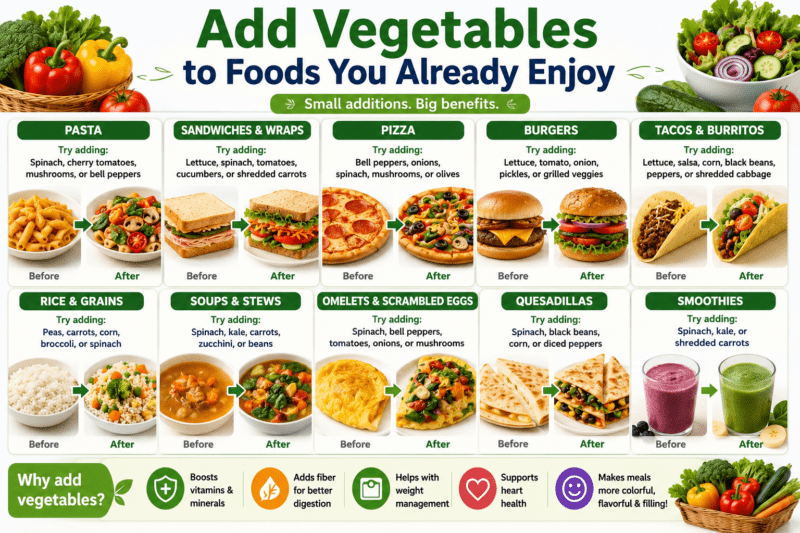
Many people think eating vegetables means giving up favorite meals. In reality, vegetables can enhance flavor, texture, and nutrition.
1. Upgrade Pasta Dishes
Add vegetables such as:
- Zucchini
- Spinach
- Mushrooms
- Broccoli
- Tomatoes
to pasta sauces and casseroles.
2. Improve Sandwiches and Wraps
Include:
- Lettuce
- Tomatoes
- Cucumbers
- Avocado
- Red onions
for added crunch and nutrients.
3. Enhance Pizza
Top homemade or restaurant pizza with:
- Bell peppers
- Mushrooms
- Spinach
- Onions
- Tomatoes
This simple change increases vegetable intake without sacrificing enjoyment.
Keep Healthy Produce Visible
Your environment strongly influences food choices.
Store Fruit on the Counter
Place a bowl of fresh fruit in a visible location such as:
- Kitchen counter
- Dining table
- Office desk
Seeing fruit regularly encourages healthier snacking habits.
Organise the Refrigerator
Store prepared fruits and vegetables at eye level.
When healthy foods are easy to see and access, they are more likely to be eaten.
Try Different Cooking Methods
Some people dislike vegetables because they have only experienced them prepared one way. Experimenting with cooking methods can transform flavor and texture.
1. Roasting
Roasting vegetables brings out natural sweetness.
Excellent choices include:
- Sweet potatoes
- Carrots
- Brussels sprouts
- Cauliflower
- Broccoli
2. Grilling
Grilled vegetables develop rich flavors and pair well with many proteins.
Try grilling:
- Zucchini
- Corn
- Peppers
- Asparagus
3. Stir-Frying
Quick stir-frying preserves nutrients and creates flavorful meals.
Combine colorful vegetables with lean proteins and whole grains for a balanced dinner.
Eat Seasonal Fruits and Vegetables
Seasonal produce is often:
- Fresher
- More flavorful
- More nutritious
- More affordable
| Spring Favorites | Summer Favorites | Fall Favorites | Winter Favorites |
| Asparagus Strawberries Peas | Watermelon Peaches Tomatoes Corn | Apples Pumpkins Sweet potatoes | Citrus fruits Kale Brussels sprouts |
Shopping seasonally helps you enjoy greater variety throughout the year.
Use Frozen and Canned Options
Fresh produce isn’t the only healthy choice.
| Benefits of Frozen Produce | Smart Canned Choices |
| Frozen fruits and vegetables are: Convenient Affordable Available year-round Nutrient-rich They are often frozen shortly after harvest, helping preserve nutrients. | Choose: No-salt-added vegetables Fruit packed in water or natural juice Avoid options packed in heavy syrup whenever possible. |
Make Fruits and Vegetables More Appealing
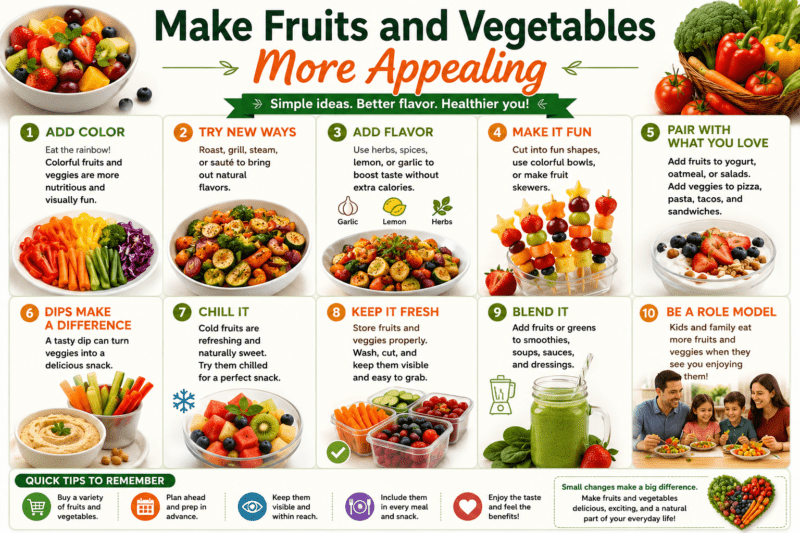
Presentation and variety can make healthy eating more enjoyable.
Create Colourful Plates
Different colours often indicate different nutrients.
Aim to include:
- Red tomatoes
- Orange carrots
- Yellow peppers
- Green spinach
- Purple cabbage
The more colors on your plate, the broader the range of nutrients you’ll consume.
Experiment with Herbs and Spices
Season vegetables using:
- Garlic
- Basil
- Oregano
- Rosemary
- Paprika
- Black pepper
Flavorful seasonings make vegetables more enjoyable without adding excessive calories.
Meal Planning for Success
Planning ahead helps eliminate guesswork during busy days.
Create a Weekly Shopping List
Include fruits and vegetables for:
- Breakfast
- Lunch
- Dinner
- Snacks
This ensures healthy ingredients are always available.
Prepare Ingredients Ahead of Time
Spend an hour each week:
- Washing produce
- Chopping vegetables
- Portioning fruit
- Preparing salads
Meal preparation makes healthy choices easier throughout the week.
Build Produce into Every Meal
Ask yourself:
“Which fruit or vegetable can I add to this meal?”
Over time, this becomes a natural habit.
Healthy Meal Ideas
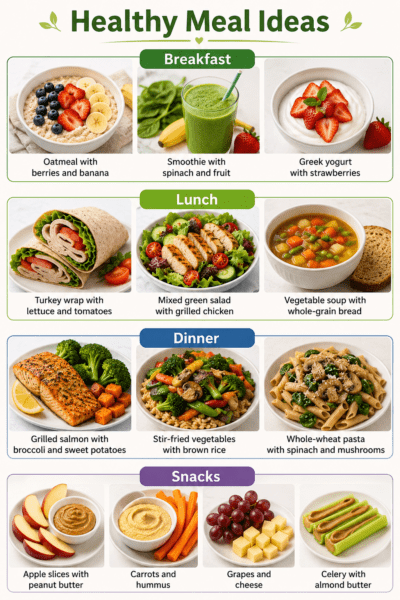
Breakfast
- Oatmeal with berries and banana
- Smoothie with spinach and fruit
- Greek yogurt with strawberries
Lunch
- Turkey wrap with lettuce and tomatoes
- Mixed green salad with grilled chicken
- Vegetable soup with whole-grain bread
Dinner
- Grilled salmon with broccoli and sweet potatoes
- Stir-fried vegetables with brown rice
- Whole-wheat pasta with spinach and mushrooms
Snacks
- Apple slices with peanut butter
- Carrots and hummus
- Grapes and cheese
- Celery with almond butter
Common Challenges and Solutions
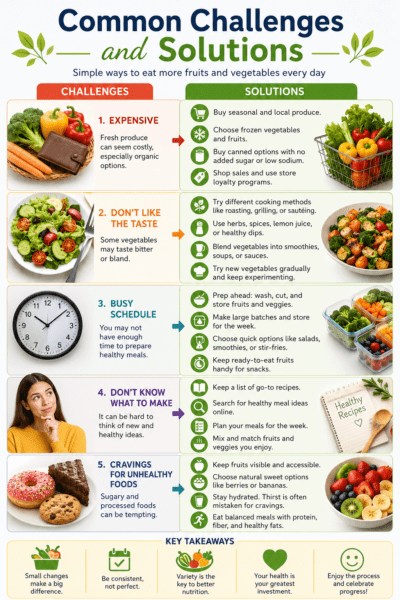
“I Don’t Like Vegetables”
Try:
- Different cooking methods
- New seasonings
- Mixing vegetables into favorite dishes
Taste preferences often change with repeated exposure.
“Healthy Food Is Expensive”
Choose:
- Seasonal produce
- Frozen vegetables
- Store-brand products
These options can be highly affordable.
“I Don’t Have Time”
Keep convenient choices available:
- Pre-cut vegetables
- Frozen produce
- Portable fruits
Even busy individuals can fit fruits and vegetables into daily routines.
Tips for Families
Parents can encourage healthy eating by making fruits and vegetables a regular part of family meals.
- Lead by Example: Children are more likely to eat fruits and vegetables when they see adults enjoying them.
- Offer Variety: Continue offering different options without pressure. Repeated exposure increases acceptance.
- Involve Kids in Preparation: Allow children to:
- Wash produce
- Choose vegetables
- Help assemble meals
Participation often increases willingness to try new foods.
Final Thoughts
Understanding how to eat fruits and vegetables is one of the simplest steps you can take to improve your overall health. By incorporating produce into every meal, choosing fruits and vegetables for snacks, and planning ahead, you can easily reach your daily nutrition goals.
Start small by adding one extra serving each day. Over time, these simple habits can lead to better energy, improved digestion, healthier weight management, and long-term wellness.
The key is consistency. Make fruits and vegetables convenient, enjoyable, and accessible, and they will naturally become a regular part of your healthy lifestyle.